
You are probably familiar with the quote, ?What?s in a name? from Shakespeare?s Romeo and Juliet. During the play, Juliet expresses grief over the last name Montague because of the long-standing rivalry between her family, the Capulet?s and Romeo?s family, the Montague?s.
The argument made by Juliet is that the actual name, Montague, is inconsequential, but it is the character and quality of the person or thing that matters most. Surely Romeo?s good character and her love for him is more important than his last name!
In contrast, the root words used to create the name of homeopathy have a lot of meaning behind them. Many people 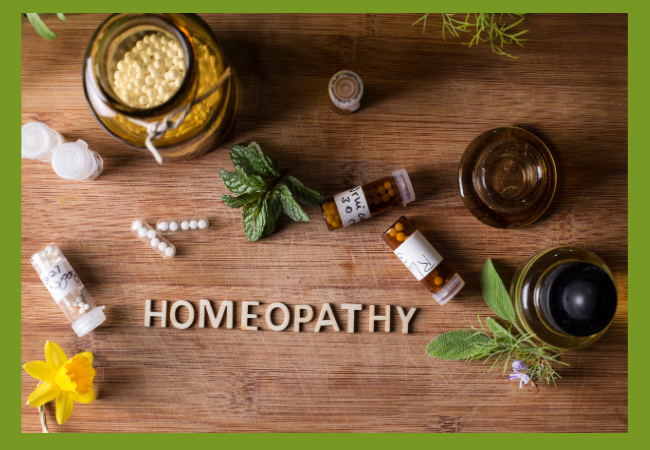 misunderstand the word homeopathy to denote ?home remedies.?
However, as we look at the origin of the word, it is made up of two Greek words, ?Homois? meaning similar and ?pathos? meaning disease or suffering.
This ?similar suffering? or homeopathy as we refer to it is based on the ?Law of Similars.? Which in simple terms just means that the ingestion of highly diluted substances produced from plants, animals, or minerals will cause symptoms in healthy people that are ?similar? to the ?diseases? they can also be used effectively to treat.
Over the last 200 plus years, homeopaths have tested these plant, animal, or mineral substances on healthy individuals who are referred to as ?provers.? These double-blind studies have provided valuable documentation on the physical, mental and emotional reactions to the substances that the provers used.
The results of these provings have provided invaluable information. 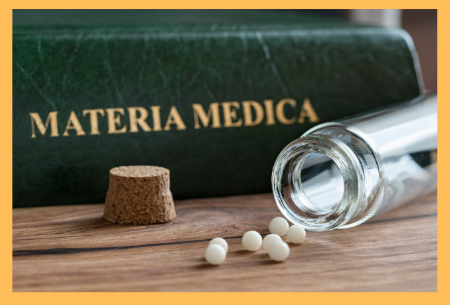 These important proving records make it possible now to match a homeopathic remedy to the current symptoms of an ill person.
If you are trying to decide whether or not to use homeopathy you may be interested in knowing that it is estimated that at least 6 million people living in the United States use homeopathy.1
Homeopathy is included in the national health systems of some 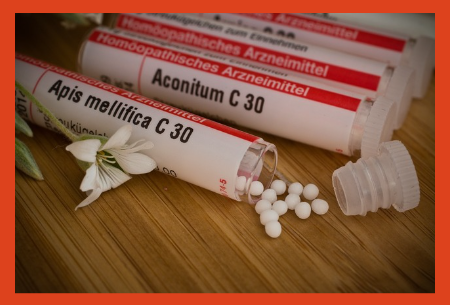 countries such as Brazil, India, Mexico, Pakistan, and Switzerland.2 The use of homeopathy is widely used in Europe: 79% of French citizens, 60% of Germans, 57% of Italians and 47% of Spanish have used homeopathic medicines in their lifetime.3
Here is an article you might enjoy reading. It shares examples of high profile people (some you may know) who have experienced the health benefits offered by homeopathy use.
So, ?What?s in a Name?? In the case of HOMEOPATHY, the name is both descriptive and relevant to millions of people around the world.

1. https://pmc.ncbi.nlm.nih.gov/articles/PMC4816083/
2. https://www.hri-research.org/resources/essentialevidence/use-of-homeopathy-across-the-world/
3. https://echamp.eu/news-and-events/news/homeopathy-in-europe-used-appreciated-and-well-known#:~:text=In%20Europe%2C%20awareness%20of%20homeopathy,homeopathic%20medicines%20in%20their%20lifetime.