

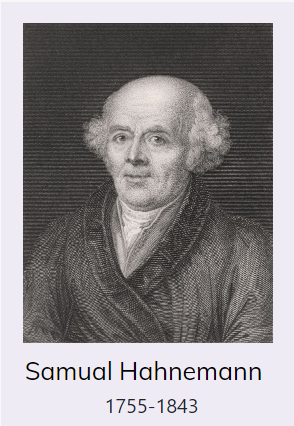
 Samuel Hahnemann (1755-1843) is credited with the discovery and development of homeopathy.
He studied medicine in Leipzig (1775) and then as a medical student transferred to Vienna (1777) where more learning opportunities were available.
While in Vienna he was mentored by Liebartz von Quarin, ?physician-in-ordinary to the Emperor?.1
He finished his schooling in 1779 with honors and began his medical career in 1780.
After practicing medicine for just a few short years, Hahnemann became quite disenchanted with the medical procedures of the day such as bloodletting. He cited that the measures used did more harm than good .
Therefore, in 1784, because of his disheartened view of the medical field, Hahnemann left it all behind and turned his energies to the self-taught study of chemistry and earning a living as a translator.
Hahnemann was a remarkable linguist and was proficient in 7 languages, German, French, English, Italian, Latin, Greek and Arabic.
He translated approximately 24 scientific texts into German. Along with the translations he also annotated them with commentaries and suggestions of his own.2
During the translation of these many texts, Hahnemann began contemplating the possibility that a substance causing a particular disease may actually be the cure for a similar disease with similar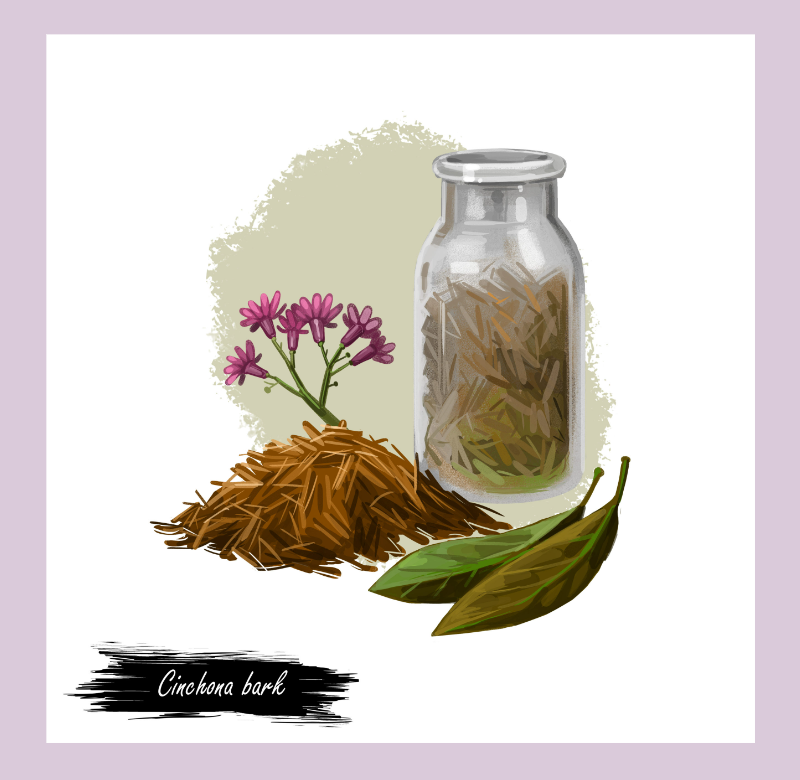 symptoms.
With that idea in mind and while working on the translation of William Cullen?s Materia Medica in 1790 which specifically discussed the qualities of Cinchona (Peruvian bark), Hahnemann decided to test his new theory of ?like cures like? or ?the law of similars?.
Over the next 6 years, Hahnemann completed a series of experiments using Cinchona and other substances helping to validate "the law of similars".
After his many years of experimenting, Hahnemann wrote his observations in an article published by the prestigious Hufeland's Journal.
This of course is only a brief overview of the origins of homeopathy. There is much more to share.
However, I'm signing off for now. I hope you'll come back and read more about the amazing life of Samuel Hahnemann; what his peers thought of this new form of medicine, as well as the introduction of homeopathy into the United States.
[1] https://www.ncbi.nlm.nih.gov/pmc/articles/PMC9725963/pdf/homoeopathphys134629-0005.pdf
[2] http://www.homeoint.org/morrell/articles/pm_trans.htm